
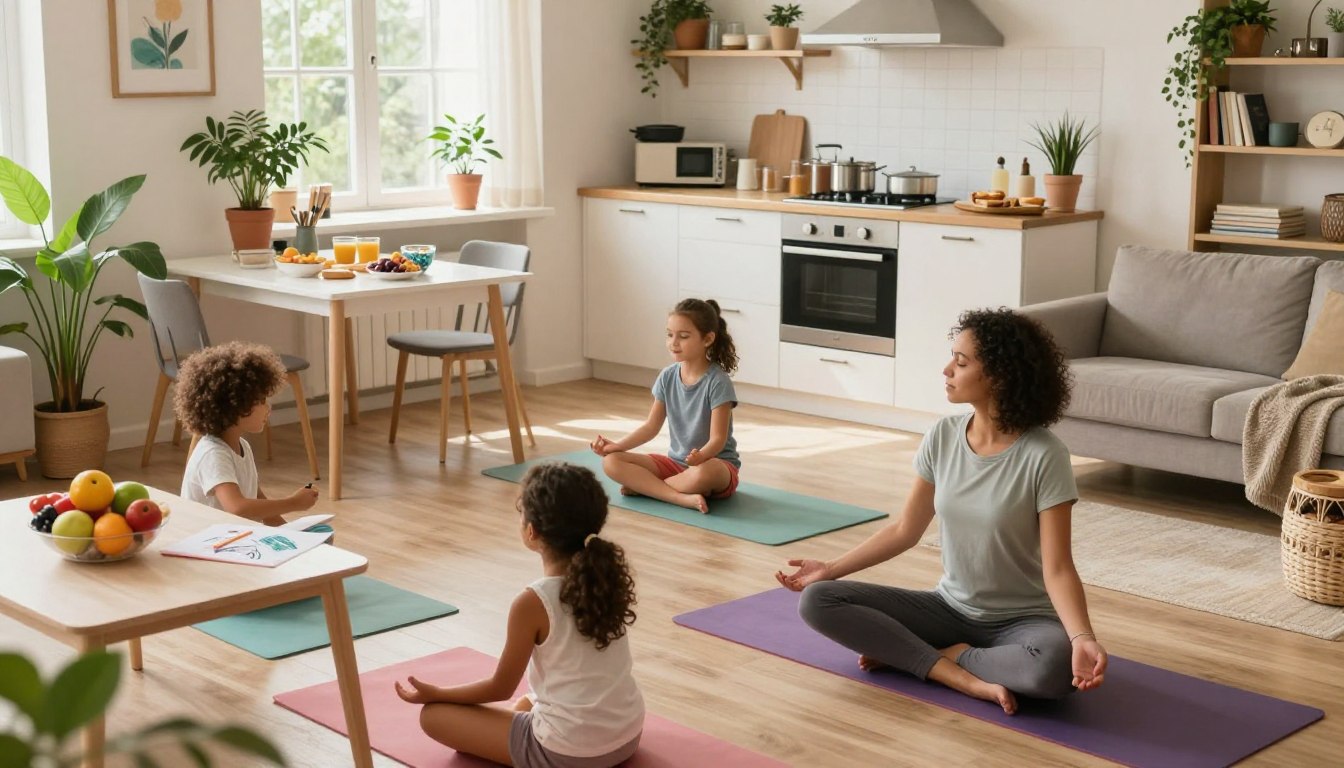
Did you know that eating together as a household can increase a child’s intake of fruits and vegetables by nearly 24 percent? This simple act proves that small changes lead to huge results. Building a happy home starts with shared moments and consistent habits.
Integrating family health and wellness into your busy schedule doesn’t have to be a chore. Most people feel overwhelmed by complex fitness plans or strict diets. However, the secret lies in finding joyful movements and nutritious snacks that everyone enjoys together.
Establishing effective daily wellness routines for families creates a sense of stability and belonging. When you prioritize these rituals, you lower stress levels and boost emotional connections. Start small today to see a lasting transformation in your household’s energy and spirit.
Key Takeaways
- Consistency is the primary key to lasting health.
- Shared meals significantly improve nutritional choices for children.
- Physical activity should be fun and involve every member.
- Small rituals effectively reduce overall household stress levels.
- Emotional bonding strengthens physical well-being and security.
- Simple changes often yield the most sustainable results.
Why Family Wellness Routines Matter for Long-Term Health
Family wellness routines play a significant role in promoting long-term health and stronger family bonds. By incorporating consistent practices into daily life, families can foster a culture of health and well-being that benefits everyone.
Healthy habits for families are built through routines that encourage physical activity, balanced eating, and mental well-being. When families prioritize wellness together, they create a supportive environment that promotes healthy lifestyles.
Some key benefits of family wellness routines include:
- Improved Physical Health: Regular physical activity and balanced nutrition contribute to overall physical well-being.
- Enhanced Mental Health: Practices like mindfulness and open communication support mental and emotional well-being.
- Stronger Family Bonds: Shared wellness activities foster connection and strengthen family relationships.
Family wellness strategies can be simple yet effective. For example, scheduling regular family time for activities like walking, playing games, or cooking together can make a significant difference. These shared experiences not only promote health but also create lasting memories.
By adopting family wellness routines, families can develop healthy habits that last a lifetime. It’s about creating a culture that values well-being and supports each member in achieving their health goals.
Create Energizing Morning Wellness Rituals
A morning wellness routine is not just about individual health; it’s about creating a culture of wellness that benefits the entire family. By starting the day with a consistent and positive routine, families can set themselves up for success and foster a deeper connection with one another.
Establish Consistent Wake-Up Times for Everyone
One of the foundational elements of a successful morning wellness routine is establishing a consistent wake-up time for all family members. This helps regulate the body’s internal clock and can improve the quality of sleep. Consistency is key to making mornings feel more manageable and less chaotic.
Practice Morning Gratitude and Positive Affirmations
Beginning the day with a practice of gratitude and positive affirmations can have a profound impact on mental and emotional well-being. “I am grateful for this new day” or “I am capable of handling whatever comes my way” are examples of affirmations that can help set a positive tone. Sharing gratitude around the breakfast table can also foster a sense of connection and appreciation among family members.
“The way to get started is to quit talking and begin doing.”
Start with Hydration and Light Stretching
Hydration and stretching are simple yet effective ways to kick-start the morning. Drinking water first thing in the morning helps rehydrate the body after a night of sleep, while light stretching can increase blood flow and flexibility. This is where family fitness routines can begin to take shape, even if it’s just a few simple stretches together.
Simple Stretches Kids and Adults Can Do Together
- Neck stretches: Slowly tilt your head to the side, bringing your ear towards your shoulder.
- Shoulder rolls: Roll your shoulders forward and backward in a circular motion.
- Leg swings: Stand with your feet hip-width apart and gently swing one leg forward and backward.
These stretches are easy to do together as a family and can be a great way to bond while promoting flexibility and reducing stress.
By incorporating these simple morning rituals into your daily routine, you can create a more energized and connected family. It’s about making small changes that add up to make a big difference in your overall wellness and quality of life.
Build Daily Wellness Routines for Families That Stick
By incorporating daily wellness routines, families can develop healthy habits that benefit everyone in the long run. The key is to create routines that are both enjoyable and sustainable.
Design a Structured Yet Flexible Daily Schedule
Creating a daily schedule that balances structure and flexibility is crucial for families. A structured schedule helps in planning activities, while flexibility allows for adjustments as needed.
Benefits of a Balanced Schedule:
- Reduces stress by having a clear plan
- Allows for spontaneity and adaptability
- Helps in prioritizing wellness activities
Schedule Regular Family Connection Time
Regular family connection time is vital for fostering wellness in families. It strengthens bonds and improves communication among family members.
Daily Check-Ins to Share Wins and Challenges
Daily check-ins provide an opportunity for family members to share their experiences, both positive and negative. This practice encourages empathy and support within the family.
A simple table to track daily check-ins could look like this:
| Family Member | Win | Challenge |
|---|---|---|
| Parent 1 | Completed a project | Managed household chores |
| Parent 2 | Had a good workout | Dealt with traffic |
| Child 1 | Did well on a test | Struggled with homework |
Set Achievable Wellness Goals Together
Setting achievable wellness goals as a family promotes unity and motivation. It’s essential to make sure these goals are realistic and aligned with everyone’s needs.
By working together to set and achieve wellness goals, families can improve their overall well-being and create lasting healthy habits.
Make Family Fitness Routines Fun and Sustainable
Establishing a fun and sustainable family fitness routine can be the key to a healthier, happier family. The goal is to make physical activity a enjoyable experience that everyone looks forward to, rather than a chore.
Turn Physical Activity into Quality Time
One of the most effective ways to make family fitness fun is to turn physical activity into quality time. This can be achieved by engaging in activities that everyone enjoys.
Dance Parties and Active Games
Hosting dance parties or playing active games like tag, hide-and-seek, or Simon Says are great ways to get everyone moving and laughing together. These activities not only promote physical health but also create lasting memories.

Outdoor Adventures and Nature Walks
Organizing outdoor adventures such as hiking, biking, or simply going for a nature walk can be a wonderful way to spend quality time together as a family while staying active. Being in nature has additional benefits for mental health and well-being.
Create Friendly Fitness Challenges
Creating friendly fitness challenges can be a great motivator for family members to stay active. This could be a weekly challenge to see who can take the most steps, ride their bike the farthest, or complete a certain number of workouts.
| Fitness Challenge | Goal | Reward |
|---|---|---|
| Step Challenge | 10,000 steps per day | Extra storytime |
| Bike Ride Challenge | Ride 5 miles without stopping | Family movie night |
| Workout Challenge | Complete 3 workouts per week | Outdoor picnic |
Mix Up Activities to Keep Everyone Engaged
To keep the family fitness routine from becoming boring, it’s essential to mix up the activities. This could mean trying a new sport, visiting a different park, or even just changing the routine of your daily walk.
By varying the activities, you can keep everyone engaged and interested in staying active. It’s also a great way to discover new activities that the family enjoys together.
Develop Healthy Eating Habits as a Family
Developing healthy eating habits as a family is a crucial step towards achieving overall wellness. By working together to create a balanced and nutritious diet, families can foster a positive relationship with food that benefits everyone.
Involving Everyone in Meal Planning and Preparation is a great way to start. When family members are engaged in the process of planning and preparing meals, they are more likely to be excited about eating the food. This can be achieved by:
- Creating a weekly meal plan together as a family
- Allowing each member to contribute to the grocery list
- Assigning tasks to each family member during meal preparation
Involve Everyone in Meal Planning and Preparation
By involving children in meal planning, they can learn about different types of food, their nutritional benefits, and how to make healthy choices. This not only educates them but also makes them more invested in the meals.
Protecting Family Dinner Time as Sacred is another vital aspect. In today’s busy world, it’s easy to let dinner time become rushed or eaten on the go. However, having dinner together as a family provides an opportunity to bond and share experiences.
Protect Family Dinner Time as Sacred
To make family dinner time more meaningful, consider the following:
- Set a regular dinner time and stick to it
- Create a welcoming atmosphere by turning off the TV and putting away electronic devices
- Encourage conversation by sharing stories about your day
Make Nutrition Education Hands-On and Fun
Making nutrition education engaging is crucial for helping family members understand the importance of healthy eating. This can be achieved through hands-on activities such as:
- Gardening: Planting a home garden where family members can grow their own fruits and vegetables
- Cooking classes: Taking a cooking class together to learn new recipes and cooking techniques
- Nutrition workshops: Attending workshops or seminars on nutrition and healthy eating
As
“The way we eat is a reflection of our culture, our values, and our relationship with the world around us.”
, making healthy eating a family affair can have a lasting impact on your overall wellness.
Foster Mental and Emotional Wellness Daily
By prioritizing mental and emotional wellness, families can build a strong foundation for overall health. This involves creating an environment where everyone feels supported and encouraged to express themselves.
Encourage Open and Judgment-Free Communication
Open communication is the backbone of a healthy family dynamic. It allows family members to share their feelings, concerns, and experiences without fear of judgment. To foster this, create a safe space where everyone feels heard and understood.
- Set aside dedicated time to talk to each other
- Practice active listening by maintaining eye contact and avoiding interruptions
- Show empathy and understanding towards each other’s feelings
Introduce Simple Mindfulness Practices
Mindfulness practices can significantly reduce stress and improve emotional well-being. Introducing simple techniques can help family members manage their emotions and stay present.
Breathing Exercises for Stress Relief
Breathing exercises are a simple yet effective way to calm the mind and body. Try incorporating deep breathing exercises into your daily routine, such as:
- Inhale deeply through the nose for a count of four
- Hold the breath for a count of four
- Exhale slowly through the mouth for a count of four
Guided Family Meditation Sessions
Guided meditation can be a great way to introduce mindfulness to your family. You can find numerous resources online, including apps and videos, that offer guided sessions suitable for all ages.

Establish Healthy Screen Time Boundaries
Excessive screen time can negatively impact mental and emotional health. Establishing boundaries around screen use can help mitigate these effects.
- Set screen-free zones in the home, such as the dinner table or bedrooms
- Establish screen time limits for each family member
- Encourage alternative activities, such as reading, outdoor play, or hobbies
End Each Day with Calming Evening Routines
As the day comes to a close, establishing a calming evening routine can significantly enhance your family’s overall well-being. A consistent and soothing pre-bedtime routine helps signal to both children and adults that it’s time to wind down, preparing your family for a restful night’s sleep.
Maintain Consistent Bedtimes Across the Week
Consistency is key when it comes to bedtimes. Maintaining the same bedtime across the week, including weekends, helps regulate your family’s internal clocks. This consistency can improve the quality of sleep and overall health. To achieve this, establish a bedtime routine that works for everyone and stick to it, even on weekends or during vacations.
- Set a specific bedtime and stick to it.
- Gradually adjust bedtime if necessary, to avoid disrupting the routine.
- Encourage older children and teenagers to take ownership of their bedtime routine.
Design Relaxing Pre-Sleep Rituals
Pre-sleep rituals are essential for creating a calming atmosphere that promotes relaxation. These rituals can vary from family to family but should be consistent and enjoyable for all members.
Reading Together Before Bed
One of the most effective ways to wind down is by reading together as a family. This not only fosters a love for reading but also provides an opportunity for bonding and relaxation. Choose books that are engaging yet calming, and make this a special time by dimming the lights and creating a cozy atmosphere.
Share Daily Reflections and Appreciation
Ending the day with a moment of reflection can be incredibly beneficial. Take a few minutes to share your gratitude and reflect on the day’s events. This practice can help cultivate a positive mindset and strengthen family bonds.
Some ways to practice daily reflections include:
- Sharing three things you are grateful for.
- Discussing the highlights of your day.
- Reflecting on challenges and how you overcame them.
By incorporating these calming evening routines into your family’s daily schedule, you can improve sleep quality, enhance family self-care activities, and contribute to creating a healthy family lifestyle.
Conclusion
Establishing daily wellness routines for families is a powerful step towards promoting well-being in families. By incorporating simple yet effective habits into your daily life, you can foster a culture of health and happiness that benefits everyone.
From creating energizing morning rituals to winding down with calming evening routines, the strategies outlined in this article provide a comprehensive approach to family wellness. By working together and making small changes, families can develop healthy habits that last a lifetime.
Start your journey today by introducing one or two new wellness practices into your daily routine. As you progress, you’ll find that these small changes can have a significant impact on your overall well-being and happiness. By prioritizing daily wellness routines for families, you’re investing in a healthier, happier future for yourself and your loved ones.