

Did you know that keeping your emergency fund in a standard checking account can cost you hundreds of dollars each year? Inflation quietly eats away at your buying power. Many people leave their money idle in accounts that don’t grow it.
Taking control of your financial future begins with the right tools. In 2024, finding the best place for your money is more important than ever. Look at interest rates, fees, and how easy it is to get to your money to make sure it grows safely.
This guide will help you understand modern banking better. By focusing on High-Yield Savings Accounts, you’ll learn to get more returns without losing security. Knowing these basics lets you reach your financial goals with confidence. Using high-yield savings accounts wisely is key to long-term financial stability.
Key Takeaways
- Inflation reduces the value of money kept in traditional checking options.
- Prioritizing interest rates helps your wealth grow faster over time.
- Always check for hidden fees that might eat into your annual earnings.
- Accessibility remains a critical factor for your emergency fund needs.
- Researching banking options ensures your capital stays safe and productive.
Key Factors for High-Yield Savings Accounts: What to Compare
When you start looking for high-yield savings accounts, you quickly realize that not all interest rates are created equal. Finding the right home for your hard-earned money requires a careful look at how different banks structure their offerings. By focusing on a few technical details, you can ensure your savings work as hard as you do.
Understanding Annual Percentage Yield (APY) Trends
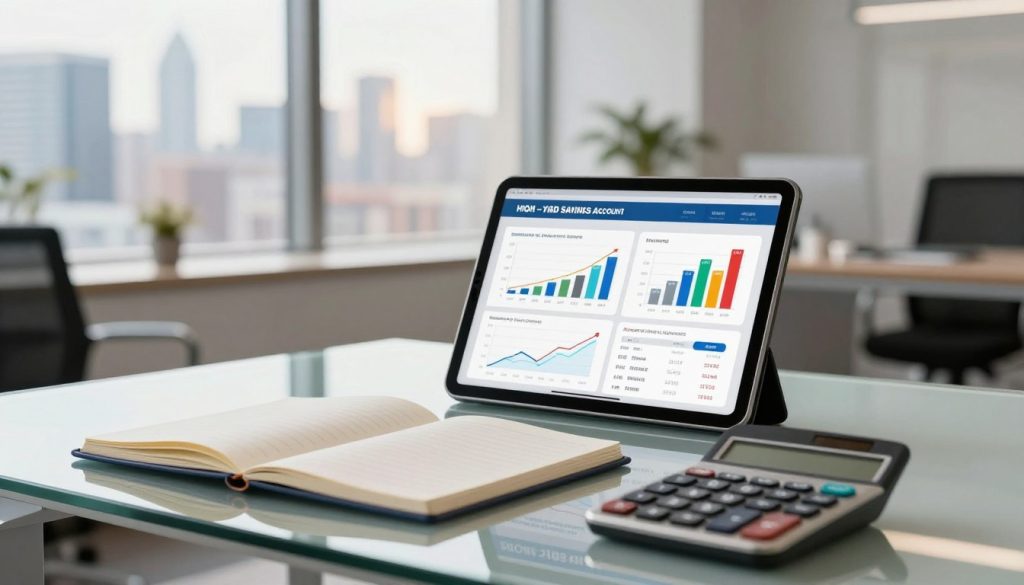
The interest you earn is mainly driven by the Annual Percentage Yield, or APY. Banks often adjust these rates based on federal benchmarks set by the central bank. When you compare apys, you should look for institutions that pass these market gains on to their customers quickly.
It is vital to remember that top interest rates are not static. They fluctuate based on the broader economic climate in the United States. To maximize your growth, keep these points in mind:
- Check if the rate is promotional or standard.
- Monitor how often the bank updates its rates.
- Look for consistency over time, not just a temporary spike.
Evaluating Minimum Balance Requirements and Fees
Even the best high-yield accounts can lose their appeal if hidden costs eat into your profits. Many banks require a minimum balance to earn the advertised rate or to avoid monthly maintenance fees. If your balance dips below this threshold, you might find that your interest earnings are wiped out by service charges.
Always read the fine print regarding account maintenance. Some institutions offer fee-free banking, which is a significant advantage for smaller savers. Before opening an account, ask yourself these questions:
- Is there a monthly service fee I must pay?
- What is the minimum daily balance required to waive fees?
- Are there penalties for withdrawing funds too frequently?
Assessing Digital Accessibility and Mobile Banking Features
In today’s fast-paced world, your bank should be as mobile as you are. Robust digital tools allow you to manage your funds conveniently from anywhere in the country. A high-quality mobile app is no longer a luxury; it is a fundamental necessity for modern banking.
Look for features that simplify your financial life, such as mobile check deposits, real-time balance alerts, and seamless fund transfers. When you have instant access to your money, you can make better financial decisions on the go. Prioritize banks that invest heavily in their user interface to ensure your experience remains smooth and secure.
Top Considerations for Selecting Your Ideal Savings Account
When you start to compare savings accounts, think about your financial health. High interest rates are nice, but the best account for you depends on your lifestyle. A good savings account comparison helps you avoid future problems.
FDIC Insurance and Bank Security Standards
Your peace of mind is key when choosing a bank. Make sure your bank is FDIC-insured. This protects your money up to $250,000 per depositor. It keeps your money safe even if the bank has problems.
Transfer Limits and Liquidity Needs
Liquidity is how easy it is to get your money in an emergency. Some online savings accounts have strict transfer limits. Check the rules to make sure you can get your money when you need it.
Customer Service Availability and Support Channels
Good customer service is vital for quick help with your account. Look for banks with many ways to contact them, like live chat or phone. A responsive team can save you time and stress.
Integration with Existing Checking Accounts
Having accounts that work together makes managing money easier. Many banks let you link your savings to your checking for quick transfers. This makes it simple to move money for bills or savings goals.
| Feature | Standard Savings | High-Yield Online Account |
|---|---|---|
| FDIC Insurance | Up to $250,000 | Up to $250,000 |
| Access Speed | Immediate | 1-3 Business Days |
| Support Channels | In-person/Phone | Digital/Phone/Chat |
| Account Linking | Limited | Seamless Integration |
Remember these points to choose the right account. A thorough savings account comparison now will save you trouble later. Whether you prefer traditional banking or online savings accounts, focus on security and ease to reach your goals faster.
Conclusion
Choosing the right place for your money is key to reaching your long-term goals. You now have the tools to compare places like Ally Bank or Marcus by Goldman Sachs confidently. Make sure your money is safe and earns good returns.
Comparing bank accounts is the best way to protect your wealth. Look beyond just interest rates to find features that fit your lifestyle. This approach helps your savings grow all year.
Your financial journey starts with smart choices today. Focus on digital tools and FDIC protections to build a strong future. Use these tips to improve your savings strategy and watch your balance grow.
Review your current banking setup against these standards. A careful comparison will show if your money is working hard for you. You have the power to shape your financial future with the right partner.