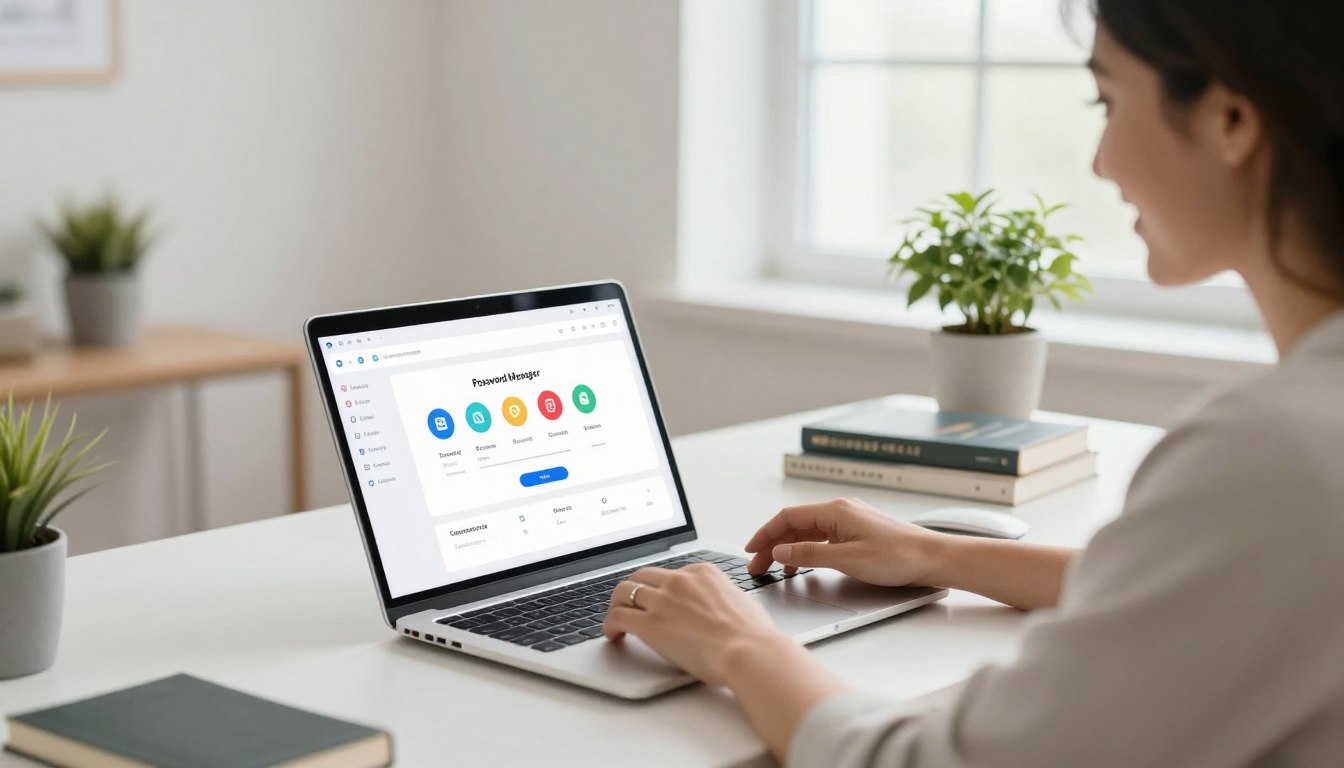
Do you struggle to remember dozens of unique login codes for your favorite websites? Many people rely on the same simple phrase for every site, which creates a serious security weakness. If one site suffers a data breach, hackers can easily access your other accounts.
A digital vault offers a smarter way to handle your online account protection. These tools store, organize, and automatically fill in your credentials so you never have to memorize them again. By using a unique, complex string for every site, you significantly improve your overall password security.
Getting started is easier than you might think. This guide will walk you through the basics of setting up an encrypted vault, using secure login features, and generating strong keys. We will also cover essential beginner password tips, including how to set up a master key and enable two-factor authentication to keep your data safe.
Key Takeaways
- Reusing credentials across multiple sites puts your digital identity at high risk.
- Digital vaults store and organize your login data in one encrypted location.
- Automated tools help you create and save complex, unique keys for every account.
- A master key acts as the single gatekeeper for your entire collection of credentials.
- Two-factor authentication adds a vital extra layer of defense to your accounts.
What a Password Manager Does and Why It Matters
A password manager acts as a digital fortress for your most sensitive online information. Instead of relying on your memory or insecure sticky notes, these tools handle the heavy lifting of digital security for you.
How Password Managers Store and Fill Login Details
At the heart of this technology is a password vault. This is a highly secure, encrypted vault where all your usernames and passwords live safely behind a single master key.
Once your data is stored, the software can autofill passwords whenever you visit a saved website or app. This eliminates the need to type out complex strings of characters manually, saving you time while keeping your accounts protected.
Beyond storage, these tools include a built-in password generator. This feature creates long, random, and unique credentials that are nearly impossible for hackers to guess.
“Security is not a product, but a process.”
By using unique credentials for every site, you ensure that even if one service suffers a data breach, your other accounts remain untouched. This proactive approach is the gold standard for modern internet safety.
Why Reusing Passwords Puts Accounts at Risk
Many users fall into the trap of password reuse because it feels convenient to remember just one or two codes. However, this habit creates a massive vulnerability in your digital life.
How one stolen password can affect multiple accounts
When you use the same password everywhere, you give attackers a master key to your entire digital identity. If a hacker steals your credentials from a minor website, they will immediately test that same combination on your:
- Personal email accounts
- Online banking portals
- Shopping and retail sites
- Social media profiles
Credential stuffing is a common attack where bots automatically try stolen passwords across thousands of sites. By breaking the cycle of reuse, you effectively shut the door on these automated threats.
password manager explained: Key Features, Benefits, and Safety Basics
Once you grasp the basics, you can easily master the advanced features that turn a simple tool into a digital fortress. These applications do more than just store data; they actively work to improve your overall security posture.
Creating Strong, Unique Passwords Without Memorizing Them
The most effective way to secure your accounts is by using strong unique passwords that are impossible for humans to guess. Manually creating these is difficult, but your software handles the heavy lifting automatically.
Password generators and recommended password length
Most tools include a built-in generator that creates complex strings of characters. For maximum security, aim for a length of at least 16 characters, including a mix of letters, numbers, and symbols. Complexity is your best defense against automated hacking attempts.
Protecting the Vault With a Master Password
Your entire collection of credentials is locked behind a single master password. This is the only key you need to remember, so it must be both secure and unforgettable.
How to create a memorable passphrase and avoid losing access
Instead of a random string, consider using a long passphrase made of four or five unrelated words. This approach makes it easier for you to recall while remaining incredibly difficult for computers to crack. Always store a physical backup of this key in a safe place, as losing it could result in permanent loss of your data.
Using Two-Factor Authentication for Extra Protection
Adding two-factor authentication provides a vital second layer of defense for your vault. Even if someone discovers your primary credentials, they still cannot access your account without this secondary verification.
Authenticator apps, security keys, and backup codes
You can choose from several methods to verify your identity:
- Authenticator apps: These generate time-sensitive codes on your smartphone.
- Security keys: Physical hardware devices that offer the highest level of protection.
- Backup codes: Single-use strings provided during setup to help you regain access if you lose your primary device.
Syncing Passwords Across Phones, Browsers, and Computers
Convenience is a major benefit of modern security tools, especially when it comes to password syncing. This feature ensures your login details are available whenever and wherever you need them.
Understanding device access, browser extensions, and account recovery
By installing browser extensions or mobile apps, you can auto-fill your credentials instantly. Always ensure that you are logged into your account on trusted devices only. If you lose access to a synced device, use your recovery email or pre-saved recovery keys to restore your connection.
Recognizing the Limits of Password Managers
While these tools are powerful, they are not a complete solution for every digital threat. You must remain vigilant to keep your information truly secure.
Phishing risks, unsafe devices, and the importance of software updates
Be wary of phishing emails that attempt to trick you into revealing your credentials on fake websites. Furthermore, never use your vault on public or infected computers, as malware can capture your keystrokes. Finally, keep your software updated to ensure you have the latest security patches against emerging vulnerabilities.
Conclusion
Your digital safety relies on a combination of smart software and careful habits. A password manager simplifies your life by creating an encrypted vault for your credentials while providing seamless autofill across your devices.
You should pair this tool with robust identity verification. Using an authenticator app or a physical security key adds a vital layer of defense for your accounts. Always store your backup codes in a secure, physical location to ensure you never lose access during an emergency.
Technology cannot solve every threat on its own. You must remain vigilant about phishing protection to avoid falling for deceptive emails or fake websites. Keep your software updated and use only trusted devices to access your sensitive data.
Understanding password manager limitations helps you stay proactive. These tools are powerful allies, but they work best when you combine them with strong security awareness. Start implementing these habits today to build a safer online experience for yourself and your family.