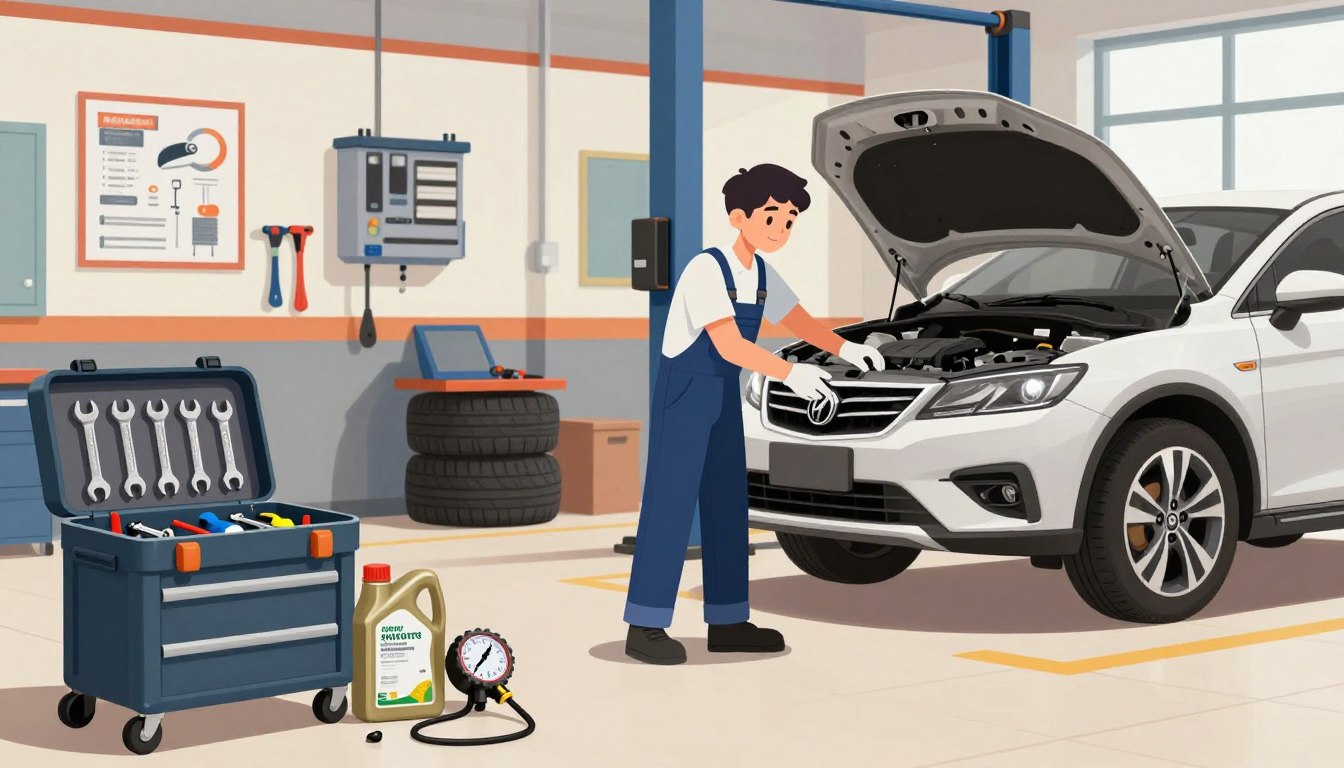
Owning a vehicle in the United States should feel empowering rather than stressful. This routine car maintenance guide is designed to help you organize everyday tasks without feeling overwhelmed by technical jargon.
By focusing on preventive vehicle maintenance, you can identify small issues before they turn into expensive repairs. While this overview covers essential vehicle maintenance basics, always remember that your owner’s manual is the best source for model-specific requirements.
We will explore how a consistent car maintenance schedule keeps your engine running smoothly. From checking fluids and tires to monitoring your battery and brakes, these simple steps ensure your transport remains dependable.
Embracing these habits is a cornerstone of smart US car care. A few repeatable checks will provide peace of mind and keep you safe on the road.
Key Takeaways
- Prioritize your owner’s manual for specific manufacturer recommendations.
- Preventive checks help avoid costly emergency repairs down the road.
- Monitor essential fluids and tire pressure to improve fuel efficiency.
- Consistent inspections of brakes and lights enhance overall safety.
- Simple, repeatable habits make vehicle ownership much more manageable.
Build a Routine Car Maintenance Guide Around Your Driving Habits
Your vehicle’s longevity depends heavily on how well you align your driving habits with a consistent care routine. While every car comes with a standard set of instructions, your personal driving style—whether you navigate heavy city traffic or take long highway trips—dictates how often you should visit the shop.
Follow the Owner’s Manual and Mileage-Based Service Schedule
The owner’s manual maintenance guide is your primary roadmap for vehicle health. It outlines the manufacturer’s recommended intervals for essential tasks like oil changes, filter replacements, and fluid flushes.
However, you should also consider a mileage-based service approach to account for your specific environment. If you frequently drive on dusty roads, tow heavy trailers, or spend hours idling in stop-and-go traffic, your car may require more frequent attention than the standard manual suggests.
Set Monthly, Seasonal, and Annual Maintenance Reminders
Consistency is the secret to avoiding unexpected breakdowns. By using digital calendars or phone alerts, you can easily manage your maintenance reminders to ensure no task slips through the cracks.
- Monthly: Check tire pressure and fluid levels.
- Seasonal: Prepare for extreme weather by testing your battery and inspecting wiper blades.
- Annual: Schedule a comprehensive professional inspection to review the overall health of your vehicle.
Keep a Simple Service Record for Repairs, Inspections, and Recalls
Maintaining organized vehicle service records is a smart habit that pays off when it is time to sell or trade in your car. A clear history of repairs and inspections proves that you have taken excellent care of your investment.
Make sure to include documentation for vehicle recall checks in your file. Staying updated on safety recalls ensures that your car remains safe and compliant with current manufacturer standards, giving you peace of mind every time you get behind the wheel.
Handle the Essential Checks That Keep Your Vehicle Road Ready
Taking charge of your vehicle’s health starts with a few essential checks you can perform at home. By staying proactive, you ensure your car remains reliable and safe for every trip. Consistent attention to detail prevents minor issues from turning into expensive mechanical failures.
Check Engine Oil and Replace It at the Proper Interval
Your engine relies on clean oil to reduce friction and prevent overheating. An engine oil change is perhaps the most critical task for long-term engine health. The timing for this service varies based on your specific vehicle, the type of oil used, and your typical driving conditions.
Use the Correct Oil Grade and Check the Level Safely
Always consult your owner’s manual to identify the manufacturer-recommended oil grade. To check the level, park on level ground and wait for the engine to cool. Pull the dipstick, wipe it clean, reinsert it, and check that the oil level falls within the designated marks.

Inspect Tire Pressure, Tread Depth, and Uneven Wear
A regular tire pressure check is vital for both fuel efficiency and safety. You should always measure pressure when the tires are cold, using the specifications found on the driver’s side door placard rather than the number printed on the tire sidewall.
Prepare for Temperature Changes, Long Trips, and Winter Driving
Monitoring tire tread depth is equally important for maintaining traction on wet or icy roads. In the United States, a tread depth below 2/32 of an inch is widely considered an unsafe legal benchmark. If you notice uneven wear patterns, it often signals an alignment or suspension issue that requires professional help.
Top Off and Inspect Essential Fluids
Performing essential fluid checks ensures that your vehicle’s various systems operate smoothly. These fluids act as the lifeblood of your car, keeping everything from the engine to the steering rack functioning correctly.
Review Coolant, Brake Fluid, Transmission Fluid, Power Steering Fluid, and Windshield Washer Fluid
Each fluid serves a unique purpose, such as cooling the engine or enabling smooth gear shifts. Check these reservoirs periodically to ensure they remain between the minimum and maximum fill lines. If you notice a sudden drop in any fluid level, it may indicate a leak that needs immediate repair.
Test the Battery, Lights, Wipers, and Belts
Proper battery maintenance involves keeping terminals clean and ensuring the connections are tight. You should also test your headlights, turn signals, and brake lights to ensure visibility. Don’t forget to inspect your wiper blades for streaks and check accessory belts for signs of cracking or fraying.
Recognize Warning Signs That Require a Professional Inspection
If your car struggles to start or if you see warning lights on the dashboard, it is time for a professional evaluation. Ignoring these signs can lead to a breakdown at the most inconvenient moment. Always prioritize safety when you notice unusual performance changes.
Pay Attention to Brakes, Steering, and Suspension
Your car’s ability to stop and steer is paramount to your safety on the road. Listen closely for any changes in how the vehicle handles during daily commutes. Being aware of your car’s feedback helps you catch problems early.
Know When Squealing, Pulling, Vibrations, or Longer Stopping Distances Are Unsafe
Squealing noises during braking or a vehicle that pulls to one side are clear indicators of trouble. Vibrations in the steering wheel or noticeably longer stopping distances should prompt an immediate visit to a mechanic. These symptoms often point to worn brake pads, damaged rotors, or failing suspension components.
| Component | Check Frequency | Key Indicator |
|---|---|---|
| Engine Oil | Every 3,000–7,500 miles | Dark color or low level |
| Tires | Monthly | Low pressure or shallow tread |
| Battery | Every 6 months | Corrosion or slow starting |
| Brakes | Every 10,000 miles | Squealing or soft pedal |
Conclusion
Maintaining a reliable car requires a proactive mindset. By following a consistent car maintenance checklist, you protect your investment and ensure your safety on the road.
Regularly checking your oil, fluids, and lights builds a strong foundation for vehicle health. Prioritize tire safety by monitoring pressure and tread depth before every long trip. A quick brake inspection can prevent costly repairs and keep your stopping power sharp.
Pay close attention to how your car feels during daily drives. Unusual noises or vibrations in the steering and suspension systems serve as early warning signs. When these issues persist or feel unclear, a professional auto inspection provides the expert insight needed to resolve problems quickly.
Small, routine habits transform your vehicle into a dependable, road-ready vehicle. Dedicating time to these simple tasks keeps you moving safely through every season. Your commitment to basic care pays off with a smoother driving experience and peace of mind behind the wheel.